
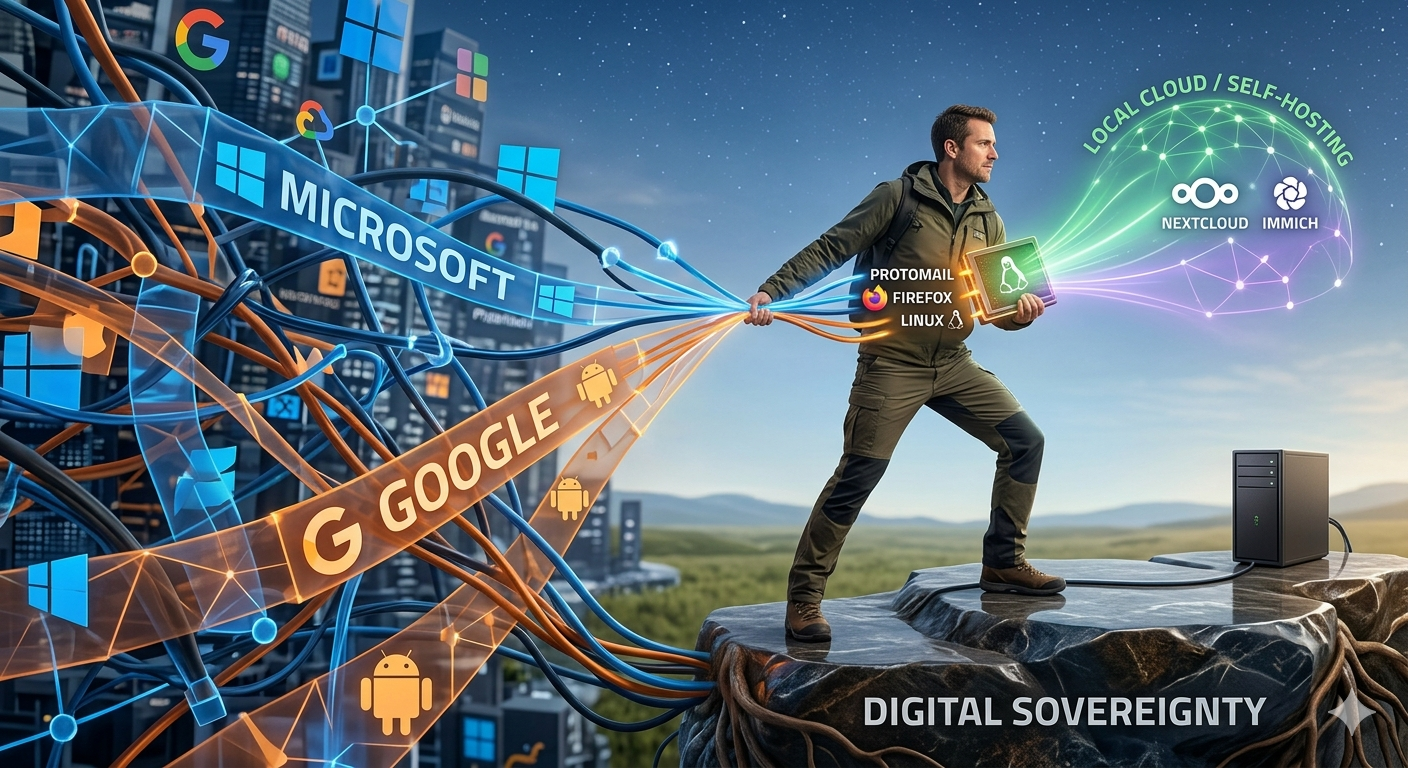
1. The Foundation: Desktop Operating Systems
Windows 11 has increasingly shifted toward cloud dependency, telemetry tracking, and integrated AI features that process data remotely. If you want to drop Microsoft’s tracking entirely, your primary route is a clean break to Linux.
- The Big Shift: Moving to a privacy-focused Linux distribution (like Fedora or Mint) completely cuts out OS-level telemetry. You control when updates happen, what data leaves your machine, and exactly what software is running.
- The Middle Ground: If client requirements or specific software keep you tied to Windows, you have to strip it down. Using deployment tools like NTLite allows you to build a custom, stripped-down Windows ISO. You can purge native telemetry, remove forced cloud-account requirements during setup, and disable Windows Copilot before the OS ever touches a drive.
2. Reclaiming Your Identity: Email, Identity, and Browsing
Your email address is the master key to your digital identity. If Google or Microsoft hosts it, they have a front-row seat to every service you sign up for, every receipt you receive, and every flight you book.
- Email: Swap Gmail or Outlook for end-to-end encrypted alternatives like ProtonMail or Tuta. They operate under strict privacy laws and cannot scan your inbox for ad-targeting data.
- Search & Browsing: Drop Chrome and Edge immediately. Switch to Firefox (hardened with privacy settings) or Brave. Replace Google Search with Mullvad Leta, SearXNG (which you can self-host), or DuckDuckGo.
3. The Power Move: Self-Hosting & Local Cloud
The hardest part of leaving Big Tech is losing the convenience of OneDrive, Google Drive, and Google Photos. The solution isn’t giving up cloud convenience; it’s becoming your own cloud provider.
Setting up a Network Attached Storage (NAS) device running an open-source operating system like TrueNAS or Unraid flips the script. Instead of paying a subscription to rent space in someone else’s server farm, you run bare-metal hardware in your own home.
[Your Devices] ---> [Local Encrypted Network] ---> [Your TrueNAS Server]
                                                        |
                                                        +---> Nextcloud (Files)
                                                        +---> Immich (Photos)
By deploying Docker containers on your local storage array, you can replicate the entire Big Tech ecosystem without a single byte of data leaving your network:
- Nextcloud: A drop-in, self-hosted replacement for Google Drive and OneDrive, complete with document editing, calendar syncing, and contact backups.
- Immich: A high-performance, self-hosted photo backup solution that mimics the Google Photos interface, allowing you to back up your phone’s camera roll directly to your local disks.
4. Local Compute: The Next Frontier
The latest battlefield for data privacy is artificial intelligence. Big Tech wants your data flowing through their cloud models to train their next-generation systems.
The privacy-first alternative is Local AI. With modern, high-VRAM consumer hardware, you can run advanced large language models (LLMs) and image generation workflows entirely offline. Tools like Ollama for text and node-based systems like ComfyUI for generation run completely locally on your machine. Your prompts, your data, and your creative outputs never touch an external server.
Take It One Step at a Time
De-googling and dropping Microsoft isn’t an all-or-nothing weekend project. It’s a process. Start by switching your browser and search engine today. Next month, build a local storage solution.
True digital sovereignty isn’t about hiding from the world—it’s about choosing exactly who gets an invitation into your digital home.
Comments are closed